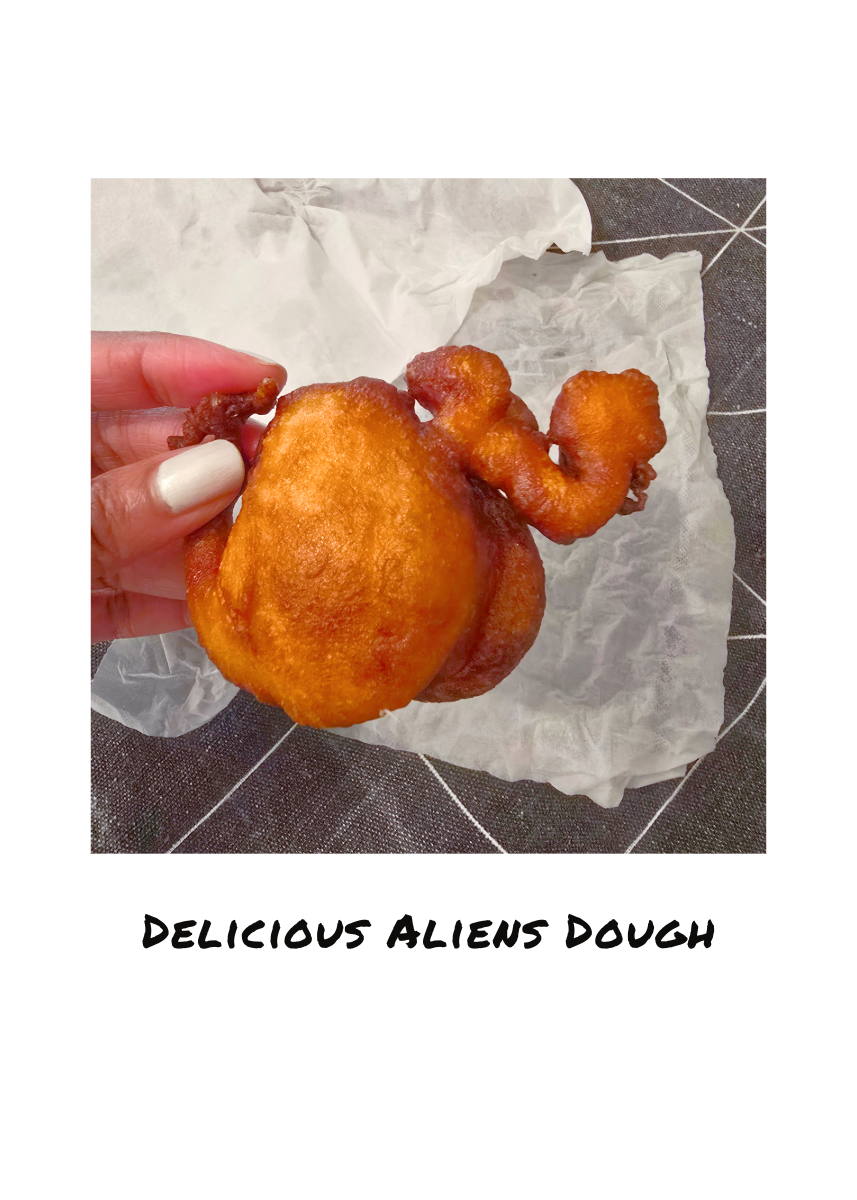
Mikate - Congolese Fried Dough
D.R COngo - central Africa
Prep: 15 min - Resting: 1 hour - Cooking: 30 min
-
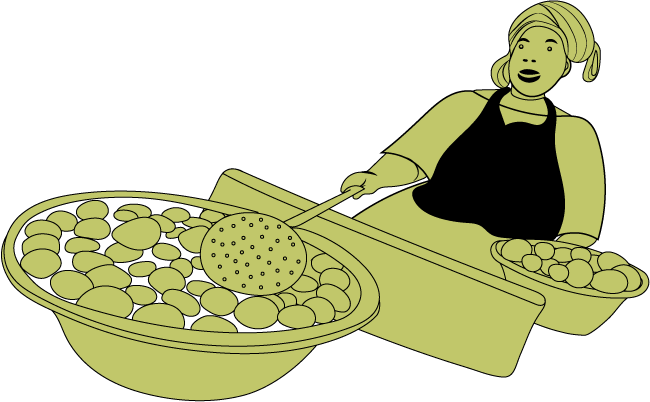
Mikate are sweet Congolese fried dough beignets. Extremely popular across the Democratic Republic of Congo, they are enjoyed at any time of day—from street food snacks sold by neighborhood aunties to festive gatherings like weddings and birthdays.
This is one of my absolute favorite Congolese treats, and one I miss the most when I'm away from Congo since it isn't easily found where I live.
Surprisingly, this was my first time making them at home! While the dough recipe is straightforward, shaping perfect round spheres proved to be quite a challenge—mine turned out rather irregular! Nevertheless, they were golden and soft on the inside. In Congo, they are traditionally paired with roasted peanuts or peanut butter, which I personally prefer over powdered sugar.
Ingredients
For 11-12 Mikate Balls
250g flour
290 ml lukewarm water
100g white sugar
1 tablespoon baker's yeast
½ teaspoon salt
Oil for frying
How to make these mikate
1. In a large bowl, I combined the flour, sugar, salt, and yeast, then mixed everything together.
Flour, sugar,salt,yeast
2. I poured in warm water—not too hot to avoid killing the yeast, and not too cold to help the dough rise more easily.
Warm water
3. I knead the dough for about 3–5 minutes until it becomes elastic. It shouldn't be too runny to form balls, nor too stiff, or the donuts will be hard. I let the dough rest for 1 hour (Note: The resting time depends on the type of yeast you use! I used Allinson's Easy Bake Yeast).
4. After 1 hour, the dough had doubled in size. I punched it down by kneading it again before moving on to cooking.
5. I heat the oil and fry the dough over medium heat, dropping in small balls (hum hum) and turning them regularly to ensure they brown evenly.
-
“Mikate” means “small cake” in Kikongo and Lingala, and “bread” in Swahili and Tshiluba—four of the five official languages of the D.R. Congo. In French, the fifth official language, Congolese call them “beignets,” which translates to “donuts.”
-
Mikate aren’t limited to Congo—they’re found in many other parts of Africa under different names, like Puff-Puff in Nigeria or Botocoin in Togo (let me know if you’ve spotted them elsewhere!). I’ve tried the Togolese versions and they’re quite similar, though they’re not commonly eaten with peanut butter there. That part, I think, is typically Congolese. I’d be curious to know what you eat them with and when in other parts of Africa— let me know in the comments!
-
Traditionally, Mikate is made with yeast for that soft, airy texture. Some modern versions use baking powder for a quicker rise. The choice subtly changes the texture—yeast gives a slightly chewier, more bread-like interior.
I used 7 g of Allinson's Easy Bake Yeast (one packet) and let my dough rest for 1 hour near a warm spot (my heater) to speed up the process.
Nutrional Info
APPROX. PER 1 MIKATE BALL (55-60G EACH)
| Calories | Fat | Sat Fat | Carbs |
|---|---|---|---|
| 193 kcal | 8.3 g | 1.2 g | 14.1 g |
| Sugar | Fibre | Protein | Salt |
| 4.5 g | 0.55 g | 1.6 g | 0.14 g |