Berber Lamb Tagine
Morocco - north Africa
prep: 30 min - Cooking: 65 min
-
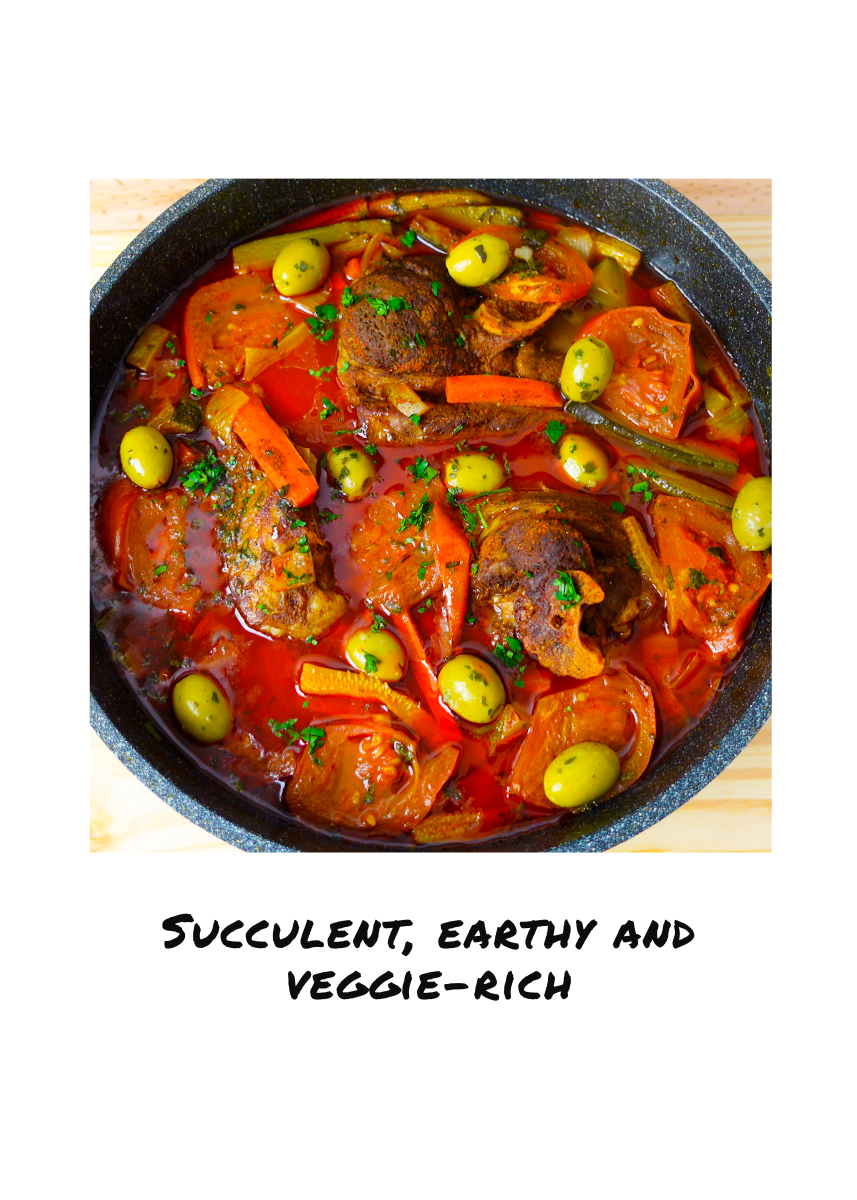
Adapted from Délices du Maroc, this lamb tagine recipe by Agadir-born Chef Mohamed Tastift highlights the culinary traditions of the Ouarzazate and Zagora regions in southern Morocco.
The key to this dish lies in its concentrated vegetable and aromatic court-bouillon, which infuses the lamb as it slow-simmers alongside seasonal vegetables and spices.
While the total cooking time is generous, the preparation itself is straightforward: once the meat is seared and the vegetables are layered in the tagine or heavy pot, the gentle simmering process requires minimal intervention. Serve piping hot with crusty bread to absorb the rich broth.
As a serving tip, you can layer raw potatoes right from the start alongside the other vegetables to simmer in the broth (I skipped them in my version) — or simply serve it with warm, crusty bread to scoop up every last drop.
Ingredients
For 6 Servings
For the Tagine:
1.5 kg lamb shoulder, cut into chunks
1 large onion, sliced
200 g carrots (about 2–3)
180 g courgettes (about 1 medium)
200 g ripe tomatoes (about 1 large)
1 cinnamon stick
2 tbsp olive oil
2 tsp smoked paprika (1 tsp for marinading, 1 tsp for cooking)
2 tsp ras el hanout (1 tsp for marinading, 1 tsp for cooking)
2 tsp fine sea salt (1 tsp for marinading, 1 tsp for cooking)
100 g fresh coriander, finely chopped
Pepper
Water, to cover
To Serve:
150 g green olives
Here is how I Made IT
1. Place the lamb in a bowl with 1 tsp smoked paprika, 1 tsp ras el hanout, 1 tsp salt, and a good drizzle of olive oil. Give it a proper massage so every piece of meat is well coated.
Lamb, smoked paprika, ras el hanout, salt, olive oil
2.Heat 1 tbsp of olive oil in your tagine (or a deep pan / skillet with a lid). Add the lamb and sear on medium-high until nicely browned all over.
Olive oil, lamb
3. Lay down your onions, followed by the carrots and courgettes cut into sticks. (Optional: you can also add potato wedges to cook with your vegetables at this stage)
Onion, carrots, courgettes
4. Sprinkle over the remaining tsp of paprika, tsp of ras el hanout, and tsp of salt, along with a good grind of black pepper. Pour in just enough water to submerge the base of the ingredients. Cover, turn the heat down, and leave to gently simmer for 50 minutes on low heat.
Paprika, ras el hanout, salt, black pepper, water
5. Uncover, layer the sliced tomato rounds on top, and scatter over 3/4 of the fresh coriander. Pop the lid back on for another 10–15 minutes.
Tomatoes, fresh coriander
6. Optional) Traditionally, you can remove the meat and vegetables at this point and reduce the sauce over medium heat for 15 minutes to thicken it up. But I think that at this stage it is already pure gold, and I like to save it to cook rice in or to use as a base for a soup. But feel free to reduce it more if you prefer.
7. Scatter over the green olives and the remaining fresh coriander, and serve piping hot straight out of the tagine with bread.
Green olives, fresh coriander
-
That tall, pointed lid isn't just decorative—it's a clever piece of culinary design. As the tagine simmers, steam rises, hits the cooler walls at the top of the cone, condenses, and trickles back down over the meat. This endless self-basting loop cooks everything gently in its own juices, meaning you barely need any added water for perfect tenderness.
-
The tagine’s invention goes back to North Africa’s Amazigh (Berber) nomads. While the iconic conical earthenware pot is closely tied to towns like Tafraout in the Anti-Atlas mountains, slow-steamed claypot cooking became a staple right across North Africa. Over centuries, Arab, Andalusian, and Eastern trade influences enriched the tradition, bringing warm spices, dried fruits, honey, and preserved lemons into the mix.
-
In both Berber tradition and wider Arab culture, lamb holds a special status at the table—offering it to a guest is a genuine mark of hospitality. The shoulder is particularly prized for its tenderness and rich depth, making it the premier choice for slow cooking.
-
In Ouarzazate and Zagora, this tagine is the ultimate celebration dish. On wedding mornings, the men take charge of cooking it in huge quantities. They set up charcoal braziers (kanoun) outdoors, letting the marinated lamb and vegetables simmer slowly for hours. While one person keeps an eye on the embers, the others join the musicians and start dancing.
Nutrional Info
APPROX. FOR 1 serving (330G)
| Calories | Fat | Sat Fat | Carbs |
|---|---|---|---|
| 650 kcal | 45 g | 17 g | 16 g |
| Sugar | Fibre | Protein | Salt |
| 6 g | 5 g | 43 g | 2.3 g |