D.r Congo - Central Africa
prep: 15 Min - Cooking: 50 min
-
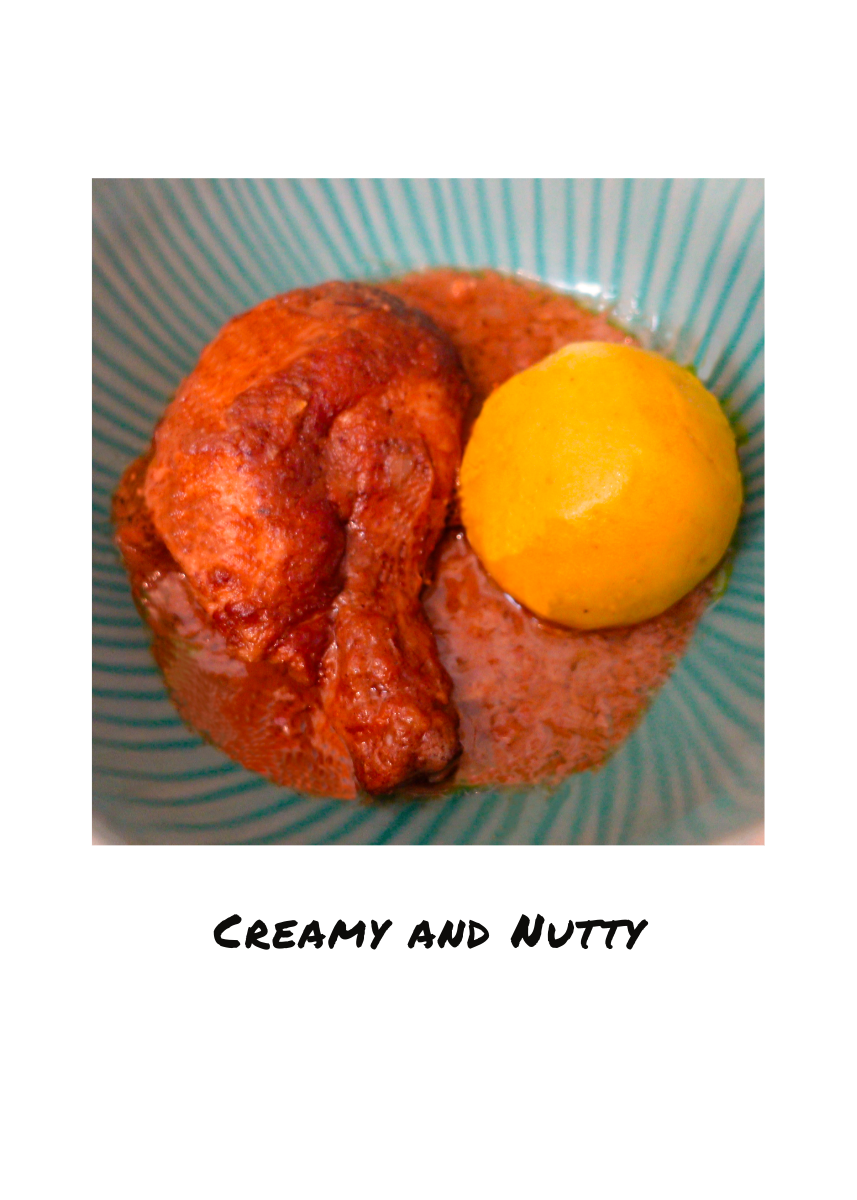
Moambe is easily one of the most iconic dishes in Congolese cuisine. It comes in two main variations: one made with palm fruit pulp and another with a peanut base — which is the version featured here.
Traditionally, roasted peanuts are ground into a smooth paste and slowly simmered with meat, fish, or vegetables. Today, using a pure 100% peanut paste (with no added sugar or oils) is the ultimate shortcut, delivering all the rich, natural flavor of roasted peanuts in a fraction of the time.
What makes this dish so rewarding is how effortlessly it comes together. The peanut paste does all the heavy lifting, while smoked chicken brings incredible depth and smokiness straight into the pot.
The result? A silky, creamy sauce that feels deeply comforting without being overly heavy, balanced by tomatoes, onions, chilies, and a few kitchen staples. No complex techniques — just a simple, deeply satisfying dish that delivers every time.
It goes perfectly with rice or lituma, delicious mashed plantain balls.
Ingredients
For 6-8 servings
1 smoked chicken (you can use regular chicken, but smoked chicken adds more flavour and cuts down on seasoning and cooking time)
1 large tomato
3 garlic cloves
2 whole fresh chillies (I recommend Scotch bonnets for their flavour)
1 small onion
1 spring onion
2 bay leaves
6 tablespoons 100% peanut paste (adjust to taste—I like mine extra peanutty!)
1 teaspoons ground nutmeg
200ml of hot water
1 tablespoon of vegetable oil (optional)
Salt, to taste (about 1½ teaspoons)
Black pepper, to taste
Here is how I Made IT
1. Cut the smoked chicken into 6–8 pieces. Mince the garlic, finely chop the tomatoes and onion, and slice the spring onion.
2. If you like, heat a little vegetable oil in a large pot. It's not essential, though, as both the smoked chicken and peanut paste release their own oil during cooking. (I add a little because my pot tends to stick)
Oil
3. Add the onion and cook until soft and translucent.
Onion
4. Add the chicken, garlic, and spring onion. Cover and cook for about 10 minutes, allowing the chicken to release its juices. Combined with the garlic and onion, those juices are where all the smoky, savoury flavours begin to build.
Chicken, garlic, spring onion
5. Add the chopped tomatoes and season with ½ teaspoon salt, black pepper, and ½ teaspoon ground nutmeg.
Tomatoes, salt, black pepper, ground nutmeg
6. Meanwhile, whisk the peanut paste with 200 ml of hot water until smooth, then pour it into the pot.
Peanut paste
7. Add the whole chillies, the remaining salt, the remaining ground nutmeg, and the bay leaves. Cover and simmer for 20 minutes.
Whole chillies, salt, ground nutmeg, bay leaves
8. Turn off the heat. Remove the whole chillies, mash them with a fork, and serve them on the side as a condiment for anyone who wants extra heat.
Note: Whole chillies add flavour to the sauce without making it particularly spicy. They only release most of their heat once they're crushed, allowing the seeds to mix into the sauce.
-
Moambe, mwambe (or mwamba) originally referred to palm nut pulp or palm oil. Because peanut paste has a similarly rich, creamy texture, the term gradually came to refer to peanut sauce as well.
The traditional palm nut moambe, however, remains a distinct dish. It's known for its reddish-brown colour and rich, earthy flavour. Peanut moambe evolved from this older culinary tradition rather than replacing it entirely.
So if you ever order moambe at a Congolese restaurant, it's worth asking which version is being served. More than once, I've ended up with the peanut version while expecting the palm nut one—and vice versa!
-
Peanuts aren't native to Africa. They were introduced from South America by Portuguese traders in the 16th century and quickly caught on across Africa. Local cooks were already grinding native seeds to thicken sauces, so peanuts fit naturally into existing cooking traditions.
By the 19th century, colonial policies and growing European demand had turned peanuts into a major cash crop. Large-scale cultivation made them widely available, turning what was once an imported crop into an everyday staple of African cuisine.
-
The story of peanut-based sauces is not unique to Congo. Across Central and West Africa, peanut-based sauces and stews developed in different regions, each with its own local identity, including:
Senegal: Mafé (maafe)
Mali (Bambara): Tiga dɛgɛ na (peanut-paste sauce)
The Gambia: Domoda
Cameroon: Nfiang OwondoWhat connects these dishes is not a single recipe, but a shared culinary foundation. Long before peanuts arrived from the Americas, some African culinary traditions already used techniques such as roasting, grinding, and incorporating seed pastes to enrich stews.
In West Africa, Manding-speaking peoples of the former Mali Empire played a major role in shaping peanut-based sauces. When peanuts were introduced, they were integrated into these existing traditions, giving rise to dishes such as Mafé, which later spread throughout the region.
Nutrional Info
APPROX. FOR 1 CHICKEN THIGHS (125G)
| Calories | Fat | Sat Fat | Carbs |
|---|---|---|---|
| 670 kcal | 45.5 g | 11.2 g | 6.5 g |
| Sugar | Fibre | Protein | Salt |
| 2.2 g | 1.6 g | 59.7 g | 1.6 g |